November 1, 2026
Fewer Stalls, Fading Flavors: Why Taiwan’s Street Food Is Disappearing
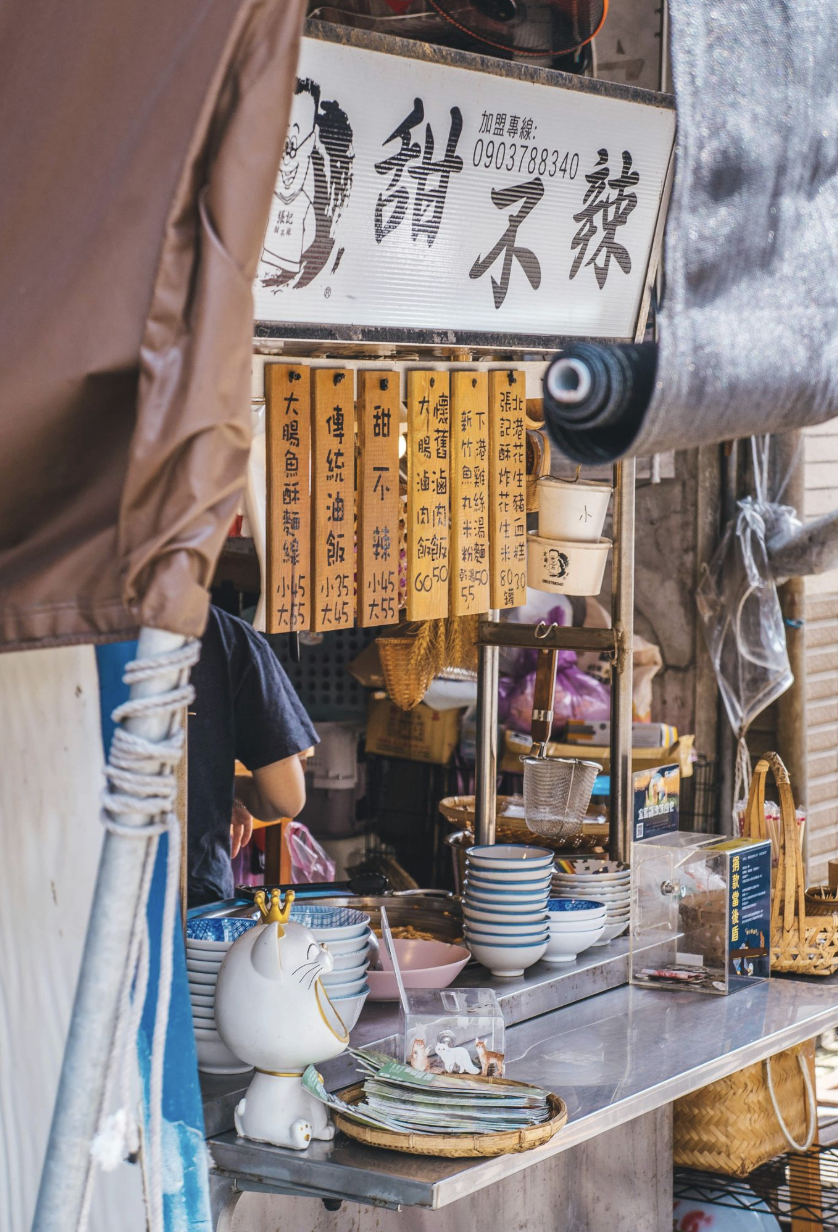
Taiwan lost nearly a quarter of its street vendors in five years. What’s driving the decline, and what’s at stake?
Photo Credit:
Romeo A. on Unsplash. (https://unsplash.com/@gronemo)
If you are Taiwanese, and you have been observing the streets of Taiwanese cities, you might have noticed that traditional Taiwanese food stands have been gradually withering away. This drop in traditional Taiwanese food stands is visible across Taiwan’s cities, especially Taipei. In this article, the key causes of this decline will be examined through an economic lens. Along with the factors, the cultural and social impacts of this dwindling pattern will also be explored.
The COVID-19 pandemic sharply accelerated the decline. At Taipei’s Shilin Night Market, visitor numbers fell by about 60%, monthly storefront rents of up to NT$200,000 (US$7,092) drove tenants away, and at least 70 businesses closed. Across Taipei, 13,606 businesses of all kinds shut down in 2020. Taipei’s commerce office also blamed reports of fruit stalls overcharging customers for damaging Shilin’s reputation.1
Also in response to the virus outbreak, delivery food services were on a rising slope of popularity as they were exceptionally convenient during lockdown periods. However, the effects of the escalation of takeout orders also placed a burden on the vendors of traditional food stands regarding commission fees and a tight margin. Most delivery platforms impose a commission fee of 30% to 35% per order, plus listing, usage, and advertising fees.2 For traditional food stands operating on razor-thin profit margins (often selling low-cost items like stinky tofu or braised pork rice), these platforms can absorb much of their profit. The digital pivot has occurred alongside a notable contraction. According to market data, the total number of street vendors across Taiwan plummeted by 74,000 over the course of five years (from 2018 to 2023).3
On the positive side, the digital shift in food services provided a sense of economic relief regarding scaling and market expansion. Traditional food stands, historically limited to foot traffic from their immediate neighborhood or night market, gained access to city-wide customer bases. Merchants on UberEats estimate that about a fifth (21%) of their customers come through the app according to a 2024 report commissioned by Uber Eats. Moreover, during periods of reduced consumer mobility and changing dining habits, delivery platforms provided a necessary baseline of orders that allowed small family-run businesses to remain active.4 For a low-margin stand, platforms bring in customers but take most of the profit on each order. Finally, some vendors moved toward digitalized operations, using QR code menus or shifting toward “cloud kitchen” setups to save on the high overhead costs of physical storefronts and dine-in maintenance.5
With the pandemic over, one might expect stands to recover. Unfortunately, the virus outbreak has already transformed the business model of restaurants: traditional stores that carry on with their original business model have discovered that the food market is no longer the same. Those who don’t adapt get pushed out.6 Furthermore, there are also the issues of an ongoing succession crisis and severe labor shortages. Operating a traditional food stand is notoriously difficult - it requires incredibly demanding physical labor involving long hours over hot stoves. Second- and third-generation youth are reluctant to take over family stands. Many prefer modern corporate careers over the grueling lifestyle of street vending.7 Even if owners want to hire external workers to keep the business alive, Taiwan’s widespread food and beverage labor shortage makes finding reliable staff nearly impossible.8
Importantly, the biggest long-term cost is cultural. There is the growing risk of cultural and heritage erasure for future generations. When family-run stands close without a successor, generations-old recipes, handmade processes (such as traditional slow-cooked heritage broths or guo rice cakes), and regional cooking lineages gradually fade away.9 Additionally, food offerings are becoming more uniform: as unique local vendors vanish, streetscapes increasingly feature repetitive, commercialized, or trend-chasing items rather than distinct regional specialties. Lastly, children today are less likely to share a core memory that previous generations have experienced - traditional stands and chaotic, cluttered markets act as living community archives; their disappearance severs the everyday link between younger generations and Taiwan’s agrarian and immigrant roots.
The slow erosion of traditional Taiwanese food stands may seem minor at first glance, but it reflects real economic pressures, and what disappears with each stand is hard to bring back.
By: Raina Z.
1: https://www.taiwannews.com.tw/news/4150431
2: https://www.youtube.com/watch?v=jHpafgvKp2w
3: https://www.crntt.tw/doc/docDetailCreate.jsp?coluid=92&kindid=0&docid=160277680
4: https://ubertaiwan.publicfirst.co/
5: https://shuj.shu.edu.tw/blog/2021/07/05/changes-of-taiwanese-dining-habit-food-delivery-platform/
6: https://english.ftvnews.com.tw/news/2022B21W09EA
7: https://news.pts.org.tw/article/707593
8: https://www.businessweekly.com.tw/careers/blog/3018702